Health Data Spaces Kit
The Health Data Spaces Kit, promoted by the Ministry for Digital Transformation and the Civil Service and managed by Red.es, represents a strategic opportunity for entities in the healthcare sector — hospitals, clinics, laboratories, health insurers, and public administrations — interested in integrating into nationally and European recognized health data spaces.
This grant program, financed with NextGenerationEU funds, aims to accelerate digitalization, interoperability, and secure collaboration in environments where electronic health data is shared responsibly and efficiently.
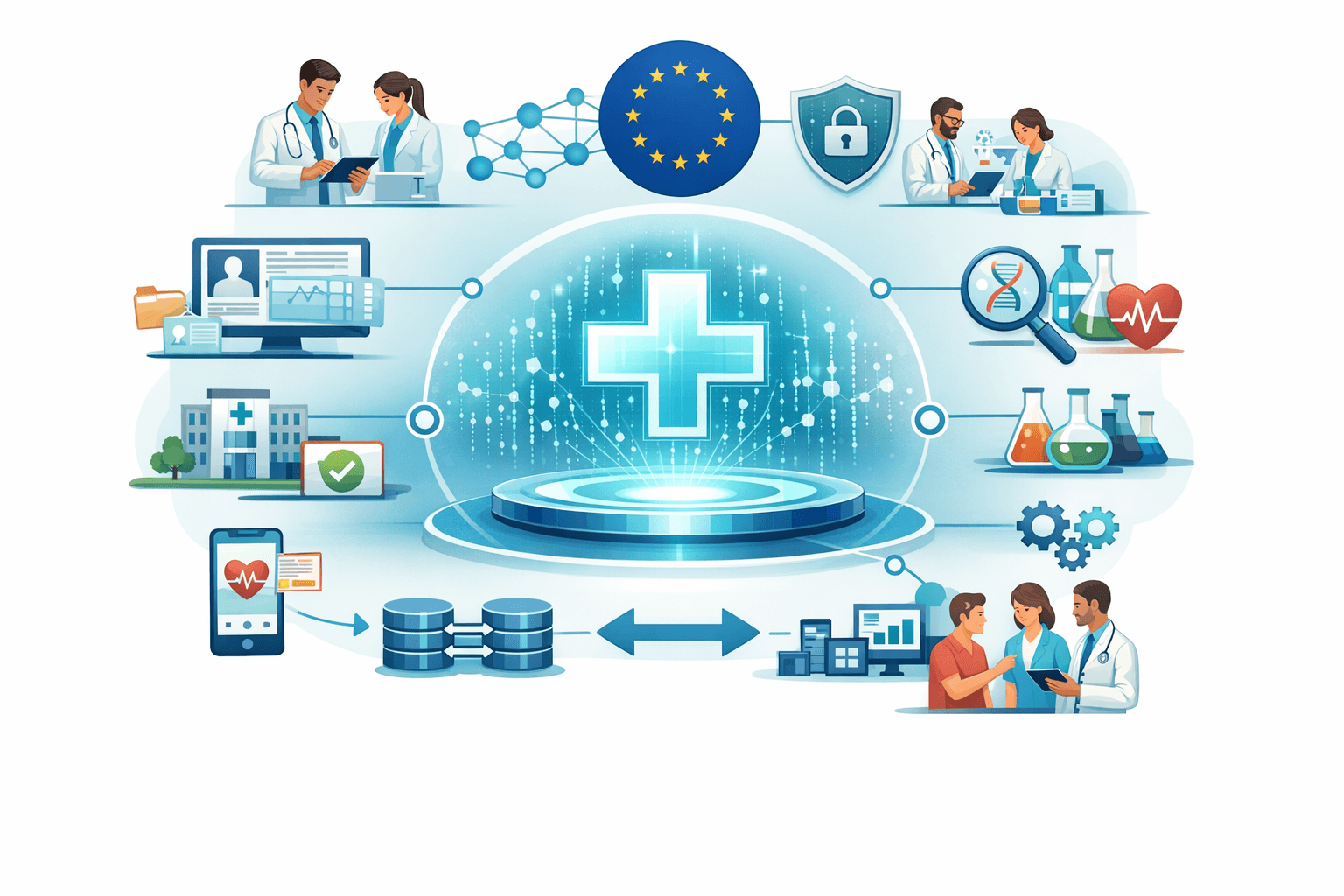
In the context of the European Health Data Space (EEDS), established by Regulation (EU) 2025/327, data spaces not only improve citizens’ access to their own electronic health data but also facilitate its secure use for research, innovation, policy-making, and emergency preparedness, including future pandemics. The EEDS ensures that health data is findable, accessible, interoperable, and reusable (FAIR principles), while maintaining a high level of protection, confidentiality, and ethical use.
For entities wishing to participate, the Health Data Spaces Kit offers financial support in two main modalities:
Effective Participant: funds the organization’s preparation to integrate into a health data space, including technical adaptation, internal process validation, and inclusion in the participant catalog. The grants range from €15,000 for active private or public entities to €25,000 for public administrations.
Advanced Provider: in addition to integration, this modality funds the publication of healthcare data products within the data space, including adapting Electronic Health Records (EHR) systems to European interoperability standards, implementing ODRL profiles for automated contracts, and integrating with electronic data access services. The grant ranges from €30,000 for private entities to €50,000 for public administrations.
Applications are processed on a first-come, first-served basis, under a non-competitive allocation regime, until the available funds are exhausted or the call closes, initially scheduled for March 2026.
Benefits of participating in health data spaces
1. Access and portability of health data for citizens
Thanks to the EEDS, patients can access priority categories of their electronic health data immediately, free of charge, and securely — including clinical summaries, diagnoses, tests, and treatments — regardless of the European country in which they reside. This allows citizens to share their data with healthcare professionals across different centers, improving care continuity and avoiding duplication of tests and procedures.
2. Innovation and research
Participation in data spaces allows hospitals, laboratories, and research entities to access anonymized or pseudonymized datasets, useful for developing new treatments, conducting epidemiological studies, or performing public health analyses. The regulatory framework ensures that these activities comply with GDPR, Regulation (EU) 2025/327, and interoperability standards such as EU 2019/243 for electronic health record exchange.
3. Efficiency improvement and cost reduction
Structured and standardized data sharing reduces repeated medical tests, information errors, and diagnostic delays, translating into cost savings for hospitals and administrations and a direct improvement in patient experience.
4. Governance and regulatory compliance
The Kit and the CRED (Reference Center for Data Spaces) provide support in governance and legal aspects, including the creation of data access and usage policies, ODRL contracts, and onboarding/offboarding procedures, ensuring that the operation of the space complies with European regulations and security standards.
Key technical aspects
Interoperability: health data spaces require that EHR systems communicate with each other and external applications using European data exchange standards (e.g., EU 2019/243).
Security and privacy: grants cover infrastructure adaptation to ensure sensitive data confidentiality, access traceability, and implementation of state-of-the-art security controls.
Data sovereignty: the regulation establishes that data must remain under the control of the owning entity, ensuring compliance with usage restrictions and patient consent policies.
Citizen integration: patients can contribute additional data to their personal health records, with mechanisms to differentiate professional input from self-reported data, without compromising the clinical validity of official records.
How to apply for grants
The Health Data Spaces Kit offers a simplified application procedure, which includes:
Entity registration on the Red.es platform.
Role definition: effective participant or advanced provider.
Technical and legal documentation: system adaptation, data protection policies, governance agreements.
Application submission: with validation of eligible expenses and integration plan.
Monitoring and reporting: periodic reports on the implementation and use of received funds.
The CRED provides technical and legal guidance, facilitating interoperability with other sectoral data spaces and alignment with European security and privacy requirements.
Conclusion
The Health Data Spaces Kit represents a unique opportunity for hospitals, laboratories, insurers, and administrations to integrate into the health data economy, generating social and economic value through collaboration and secure data exchange. The combination of European funding, technical support, and a clear regulatory framework makes this initiative highly relevant for advancing toward a digitalized, interoperable, and citizen-centered healthcare system, aligned with the objectives of the EEDS and Regulation (EU) 2025/327.
Participation not only allows access to funding but also contributes to the transformation of the Spanish and European healthcare systems, improving care quality, innovation, and sector sustainability. For entities looking to lead healthcare digitalization, the Health Data Spaces Kit is the gateway to a safer, more efficient, and collaborative future.